Indigo Sapphire Strain: Genetics, THC Levels, Yield, and Complete Grow Guide

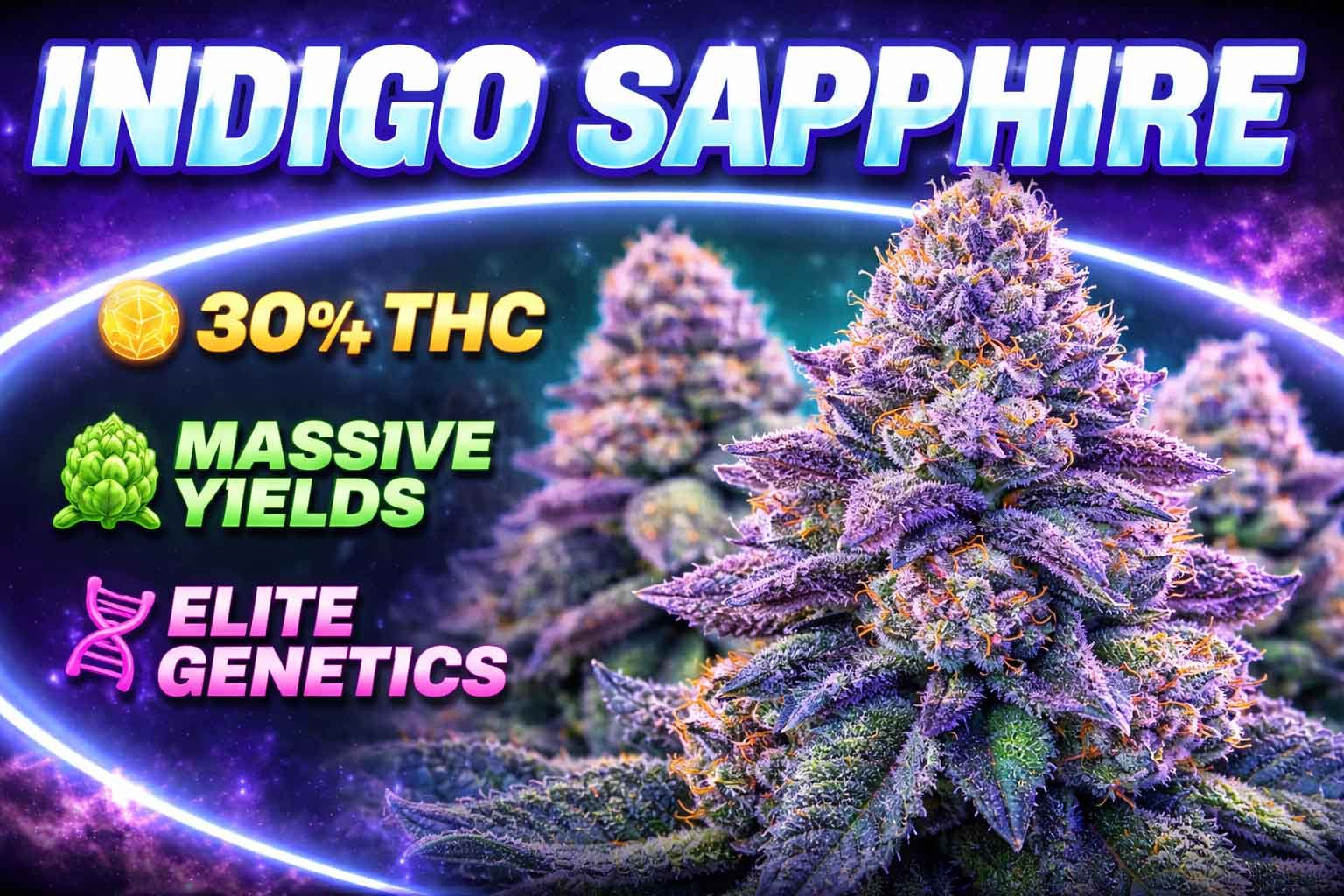
The Indigo Sapphire strain is one of the most potent modern cannabis cultivars to hit the market, combining elite genetics with extreme THC levels and heavy yields. Known for its deep purple hues, resin-coated buds, and powerful effects, Indigo Sapphire has quickly become a favorite among growers and connoisseurs alike.
In this guide, we’ll break down everything you need to know about Indigo Sapphire—its origin, genetics, indica vs sativa ratio, THC levels, flowering time, yield, and what makes it stand out in today’s competitive cannabis landscape.
What Is the Indigo Sapphire Strain?
Indigo Sapphire is a high-THC, indica-dominant hybrid bred for potency, flavor, and visual appeal. This strain is typically classified as 60% indica and 40% sativa, offering a balanced experience that leans toward deep physical relaxation with a touch of cerebral euphoria. Blimburn
It’s best known for:
- Extremely high THC levels (often over 30%)
- Dense, colorful buds with purple and blue tones
- Sweet, fruity terpene profile with grape and mint notes
- Heavy yields both indoors and outdoors
Because of its potency and bag appeal, Indigo Sapphire is often marketed as a top-shelf or “exotic” cannabis strain.
Indigo Sapphire Genetics & Lineage
One of the biggest reasons for Indigo Sapphire’s success is its elite genetic background.
👉 According to breeder descriptions, Indigo Sapphire is a cross of:
- Imperium X
- Violet Fog Blimburn
Parent Breakdown
Imperium X
- Descends from powerhouse strains like Slurricane, GMO, and Purple Punch
- Known for extreme resin production and knockout potency
Violet Fog
- A cross involving Grape Gasoline and Khalifa Mints
- Contributes relaxing effects and rich terpene complexity Blimburn
What This Means
By combining these two lines, Indigo Sapphire inherits:
- High THC potential
- Dense trichome production (great for extracts)
- Complex terpene profile (fruit + gas + mint)
This genetic pairing is designed specifically for modern cannabis consumers who prioritize potency, flavor, and bag appeal.
Indica or Sativa?
Indigo Sapphire is considered a mostly indica hybrid (60/40 indica dominant). Seed City
Effects Profile
Because of its indica dominance, you can expect:
- Deep body relaxation
- Stress relief
- Sedative qualities at higher doses
However, the sativa influence adds:
- Light euphoria
- Creative uplift
- Mental clarity (in moderate doses)
This balance makes Indigo Sapphire versatile:
- Daytime (low dose): Creative, calm focus
- Nighttime (high dose): Heavy relaxation, couch-lock potential
THC Levels: How Strong Is Indigo Sapphire?
Indigo Sapphire is widely known as a high-THC strain, often testing between:
👉 30% to 33.8% THC Blimburn
Some sources even report slightly higher phenotypes, but generally:
- Beginner users: May find it overwhelming
- Experienced users: Ideal for strong effects and tolerance
Why It’s So Potent
The high THC levels come directly from its parent strains, both of which are bred for extreme cannabinoid production.
Effects commonly reported include:
- Euphoric head rush
- Full-body relaxation
- Long-lasting high
- Strong mental and physical effects
Aroma, Flavor & Terpenes
Indigo Sapphire offers a rich terpene profile that blends sweet and gassy notes.
Dominant Flavors:
- Grape
- Mint
- Sweet fruit
- Earthy spice Seed Masters
Aroma Profile:
- Fruity and candy-like
- Slight diesel/gas undertones
- Cooling herbal finish
This terpene combination makes Indigo Sapphire stand out among other high-THC strains, as it balances sweet dessert-like flavors with classic gas notes.
Flowering Time & Grow Cycle
One of the advantages of Indigo Sapphire is its relatively fast flowering time for such a potent strain.
👉 Flowering time: 60–65 days (8–9 weeks) Seed City
Outdoor Harvest:
- Early October in most climates Seed City
This makes it a great option for growers who want:
- Fast turnaround
- High potency
- Commercial-scale yields
Yield: Indoor & Outdoor Production
Indigo Sapphire is classified as a high-yield strain, making it attractive for both hobbyists and commercial growers.
Indoor Yield:
👉 Up to 500–600g/m² Blimburn
Outdoor Yield:
👉 Around 800–1200g per plant Seed City
Why It Yields So Well
- Strong hybrid vigor from elite genetics
- Dense bud structure
- Heavy trichome production
Growers often report:
- Thick colas
- Resin-heavy buds
- Excellent bag appeal for dispensary markets
Plant Structure & Growth Characteristics
Indigo Sapphire plants are:
- Medium height indoors (100–140 cm)
- Taller outdoors (up to 220 cm) Seed City
Growth Traits:
- Strong lateral branching
- Dense canopy
- Heavy bud stacking
Grow Difficulty:
- Moderate (not beginner-level, but manageable)
Best Techniques:
- SCROG (Screen of Green)
- LST (Low-Stress Training)
- Topping for canopy control
Because of its dense buds, proper airflow is essential to prevent mold and maximize yield.
Visual Appearance: Why It Stands Out
Indigo Sapphire is a true “bag appeal” strain.
Growers can expect:
- Deep purple and blue hues
- Frosty trichome coverage
- Bright orange pistils
As flowering progresses, buds develop a jewel-toned appearance with heavy resin, making them visually striking.
This aesthetic quality makes Indigo Sapphire highly desirable in:
- Dispensaries
- Cannabis competitions
- Premium flower markets
Effects & Experience
Indigo Sapphire delivers a powerful, long-lasting high.
Common Effects:
- Euphoric uplift
- Creative stimulation
- Deep body relaxation
- Sedation at higher doses
Users often describe the experience as:
- “Balanced but strong”
- “Relaxing without immediate couch-lock”
- “Great for unwinding after a long day”
Because of its potency, dosage is important—especially for less experienced users.
Medical & Recreational Use
While not medical advice, Indigo Sapphire is commonly used for:
Potential Benefits:
- Stress relief
- Anxiety reduction
- Pain management
- Sleep support
Its indica dominance makes it particularly useful for:
- Evening use
- Recovery and relaxation
Indoor vs Outdoor Growing
Indoor Growing:
- More control over environment
- Maximizes resin production
- Ideal for consistent yields
Outdoor Growing:
- Larger plants
- Higher yields per plant
- Requires warm, stable climate
Because it finishes in early October, Indigo Sapphire performs well in:
- Mediterranean climates
- California-style outdoor grows
Is Indigo Sapphire Good for Beginners?
Not exactly.
While it’s not extremely difficult to grow, beginners should consider:
- Its high THC potency (can be overwhelming)
- Need for airflow and humidity control
- Nutrient management for optimal yield
That said, intermediate growers will find it very rewarding.
Pros and Cons
Pros:
- Extremely high THC (30%+)
- High yields
- Fast flowering time
- Unique flavor profile
- Strong bag appeal
Cons:
- Too potent for beginners
- Requires proper airflow
- Dense buds can be prone to mold if not managed
Final Thoughts: Is Indigo Sapphire Worth It?
Indigo Sapphire stands out as a next-generation cannabis strain—engineered for potency, flavor, and yield.
With:
- Elite genetics (Imperium X x Violet Fog)
- 30%+ THC levels
- Heavy yields and fast flowering
…it checks nearly every box for modern growers and consumers.
Whether you’re cultivating for personal use or commercial production, Indigo Sapphire delivers top-shelf quality with serious potency.
Quick Grow Summary
| Feature | Details |
|---|---|
| Genetics | Imperium X x Violet Fog |
| Type | 60% Indica / 40% Sativa |
| THC | 30–33.8% |
| Flowering Time | 60–65 days |
| Indoor Yield | 500–600g/m² |
| Outdoor Yield | 800–1200g/plant |
| Flavor | Grape, mint, sweet |
| Difficulty | Moderate |